
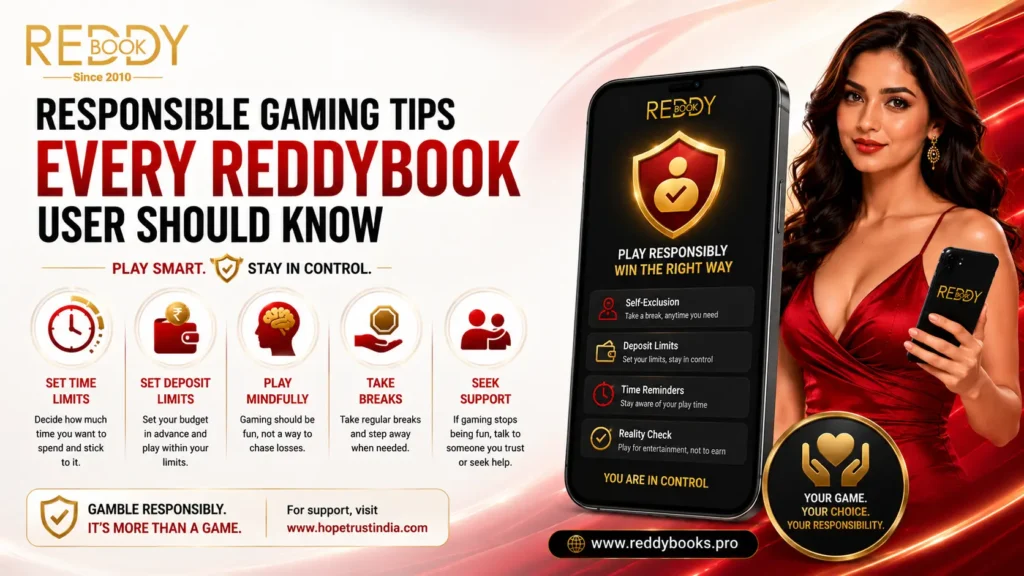
Online gaming should always be an enjoyable form of entertainment. Whether you participate in sports betting or casino games, maintaining healthy gaming habits is essential for creating a positive and balanced experience. Responsible gaming is not only about preventing problems—it is about making informed decisions, managing your time and spending wisely, and ensuring that gaming remains enjoyable rather than stressful.
Many experienced players develop responsible gaming habits long before they encounter difficulties. Setting limits, understanding personal boundaries, and recognising when to take a break are simple practices that contribute to a healthier relationship with online gaming.
This guide explains the core principles of ReddyBook Responsible Gaming, practical tips for maintaining control, common warning signs to watch for, and the habits that help users enjoy the platform responsibly. Rather than replacing the official Responsible Gaming policy, this article provides educational guidance and directs readers to the appropriate resources for additional support.
What Is Responsible Gaming?
Responsible gaming is the practice of participating in online gaming in a controlled, balanced, and informed manner. It encourages users to treat gaming as entertainment instead of a way to earn money or solve financial problems.
Responsible gaming is not limited to people experiencing difficulties. It is a set of healthy habits that benefits every user, regardless of experience level. By setting personal boundaries and understanding the potential risks of excessive gaming, users can make better decisions while maintaining a positive gaming experience.
From a practical perspective, responsible gaming begins before placing the first bet. It starts with having realistic expectations, understanding personal limits, and making decisions based on entertainment rather than emotion.
For a detailed overview of the platform’s responsible gaming tools, policies, and available support options, visit the ReddyBook Responsible Gaming page.
Why Responsible Gaming Matters
Many people associate responsible gaming only with problem gambling. In reality, responsible gaming is about creating sustainable habits that help users maintain control over both their time and spending.
Developing responsible habits provides several long-term benefits:
- It helps users make more thoughtful decisions.
- It encourages better financial planning.
- It reduces emotional decision-making during gaming sessions.
- It promotes a healthier balance between gaming and daily life.
- It makes online gaming a more enjoyable recreational activity.
One useful observation is that experienced users often focus less on short-term outcomes and more on maintaining consistent gaming habits. This mindset helps reduce impulsive decisions and supports a more enjoyable long-term experience.
Core Principles of Responsible Gaming
Responsible gaming is built on several simple principles that apply regardless of the games you play or your level of experience.
| Principle | Why It Matters |
|---|---|
| Play for entertainment | Keeps expectations realistic. |
| Set personal limits | Helps manage both time and spending. |
| Stay in control | Encourages thoughtful decision-making. |
| Take regular breaks | Reduces emotional and impulsive behaviour. |
| Know when to stop | Prevents gaming from interfering with everyday life. |
| Seek help when needed | Encourages early action if concerns develop. |
These principles are designed to help users maintain a healthy balance rather than restrict their enjoyment of the platform.
Set Personal Spending Limits
One of the simplest and most effective responsible gaming habits is deciding your budget before you begin playing.
Many users naturally decide how much they are comfortable spending on entertainment each month, whether it is for movies, dining, or other recreational activities. Online gaming should be approached in the same way.
Before starting a gaming session:
- Decide how much you are comfortable spending.
- Use only disposable entertainment funds.
- Never rely on borrowed money.
- Avoid increasing your budget after unexpected losses.
From an experience perspective, users who establish spending limits in advance often find it easier to make rational decisions throughout their gaming sessions.
Manage Your Time, Not Just Your Budget
Financial limits are important, but time management is equally valuable.
Long gaming sessions can sometimes reduce concentration and encourage impulsive decisions. Scheduling regular breaks helps users remain focused while keeping gaming in balance with work, family, and other responsibilities.
Simple time-management habits include:
- Setting a session time limit before playing.
- Taking short breaks during longer sessions.
- Avoiding gaming when tired or emotionally stressed.
- Balancing gaming with other recreational activities.
Responsible gaming is as much about managing your time as it is about managing your spending.
Recognise the Early Warning Signs
Most responsible gaming advice focuses on what to do after problems develop. A more effective approach is learning to recognise early warning signs before they become more serious.
Some signs that it may be time to pause and reassess include:
- Spending more time gaming than originally planned.
- Frequently increasing your entertainment budget.
- Feeling frustrated after losses and wanting to recover them immediately.
- Gaming interfering with work, studies, or personal responsibilities.
- Finding it difficult to stop after reaching your planned limit.
Recognising these behaviours early allows users to make adjustments before gaming begins affecting other areas of daily life.
Healthy Gaming Habits Every User Should Follow
Responsible gaming is easier when positive habits become part of your routine.
Responsible Gaming Checklist
- ✔ Set a spending limit before every session.
- ✔ Decide how much time you plan to play.
- ✔ Take regular breaks.
- ✔ Play only when you are relaxed and able to make clear decisions.
- ✔ Keep gaming separate from financial responsibilities.
- ✔ Accept both wins and losses as part of entertainment.
- ✔ Stop playing when you reach your personal limits.
These habits are simple to follow, but together they create a strong foundation for responsible participation.
Responsible Gaming vs Risky Gaming Behaviour
Understanding the difference between healthy gaming habits and risky behaviour can help users evaluate their own gaming patterns more objectively.
| Responsible Gaming | Risky Behaviour |
|---|---|
| Plays for entertainment | Plays mainly to recover losses |
| Sets spending limits | Continues spending beyond planned limits |
| Takes regular breaks | Plays continuously for long periods |
| Accepts losses calmly | Makes emotional decisions after losses |
| Balances gaming with daily life | Allows gaming to interfere with responsibilities |
This comparison is not intended to judge users. Instead, it highlights behaviours that support a healthier and more sustainable gaming experience.
Gaming Should Never Replace Financial Planning
One of the most important responsible gaming principles is maintaining realistic expectations.
Sports betting and casino games involve uncertainty, and outcomes can never be predicted with certainty. Because of this, gaming should never be viewed as a reliable source of income or a solution to financial difficulties.
Approaching gaming as entertainment helps users make more balanced decisions while reducing emotional pressure during play.
If you ever find yourself gaming primarily because of financial concerns, it is a good time to step back, pause, and seek additional guidance before continuing.
Practical Strategies for Responsible Gaming
Responsible gaming is not about avoiding online gaming altogether—it’s about creating habits that help you stay in control over time. Small, consistent actions are often more effective than waiting until gaming becomes difficult to manage.
The following strategies can help users maintain a balanced and enjoyable experience.
Set Goals Before You Start
Before beginning a gaming session, decide:
- How much time you plan to play.
- How much money you’re comfortable spending.
- When you’ll stop, regardless of the outcome.
Having clear limits before you begin makes it easier to stick to your decisions during the session.
Avoid Emotional Decision-Making
Emotions can influence judgment, especially after an unexpected win or loss.
If you notice that you’re feeling frustrated, overly excited, stressed, or pressured to continue playing, it’s usually a good time to pause and take a break before making another decision.
Keep Gaming Separate from Daily Responsibilities
Gaming should fit around your lifestyle—not replace it.
Maintain a healthy balance by prioritising:
- Family and relationships.
- Work or education.
- Physical health.
- Sleep and relaxation.
- Other hobbies and recreational activities.
Users who maintain this balance often enjoy gaming more because it remains one part of a well-rounded lifestyle.
What to Do If Gaming Stops Being Enjoyable
Responsible gaming also means recognising when it’s time to step away.
If gaming begins to feel stressful instead of entertaining, taking a break is often the healthiest decision. A short pause can provide perspective and help you evaluate whether your gaming habits still align with your personal goals.
You should consider taking a break if:
- Gaming no longer feels enjoyable.
- You regularly exceed your planned spending or time limits.
- Gaming affects work, studies, or relationships.
- You feel pressured to continue after losses.
- You find yourself thinking about gaming constantly.
Taking a break isn’t a sign of failure—it’s a responsible decision that helps maintain long-term wellbeing.
Self-Assessment Checklist
Responsible gaming starts with honest self-reflection. Asking yourself a few simple questions can help you understand whether your current habits remain healthy.
Ask Yourself:
- ✔ Am I playing mainly for entertainment?
- ✔ Do I stay within my planned budget?
- ✔ Do I stop when I reach my personal limits?
- ✔ Can I comfortably take a break from gaming?
- ✔ Does gaming fit alongside my daily responsibilities?
- ✔ Do I avoid chasing losses?
- ✔ Am I making calm, informed decisions?
If you answer “no” to several of these questions, it may be worth taking a break and reviewing the responsible gaming resources available on the platform.
Where to Find Support
Responsible gaming includes knowing where to seek assistance if you ever need additional guidance.
If you feel that your gaming habits are becoming difficult to manage:
- Take a temporary break from gaming.
- Review your personal spending and time limits.
- Speak with someone you trust.
- Explore the tools and guidance available through the ReddyBook Responsible Gaming page.
- Contact ReddyBook Customer Support if you have questions about responsible gaming features or account management.
Seeking support early is a proactive step that can help prevent small concerns from becoming larger challenges.
Practical Insights
One of the biggest misconceptions about responsible gaming is that it only applies to people experiencing gambling-related problems. In reality, responsible gaming is beneficial for every player, regardless of experience level.
From an experience perspective, users who establish healthy habits from the beginning often find it easier to maintain control over both their time and spending. They tend to make more informed decisions because they’re not reacting emotionally to individual outcomes.
Another important observation is that responsible gaming is not about eliminating enjoyment—it’s about preserving it. Setting personal limits, taking regular breaks, and maintaining realistic expectations allow gaming to remain an enjoyable recreational activity rather than becoming a source of unnecessary pressure.
Frequently Asked Questions
What is responsible gaming?
Responsible gaming means participating in online gaming in a controlled and balanced way. It encourages users to play for entertainment, set personal limits, and make informed decisions while maintaining healthy gaming habits.
Why is responsible gaming important?
Responsible gaming helps users manage their time and spending, maintain realistic expectations, and reduce the risk of gaming negatively affecting other areas of life.
How can I set personal gaming limits?
Decide your entertainment budget and session length before you start playing. Once those limits are reached, end the session regardless of the outcome.
What are the warning signs of unhealthy gaming habits?
Common signs include chasing losses, spending more than planned, gaming for extended periods without breaks, neglecting responsibilities, or feeling unable to stop playing.
Should I play if I’m feeling stressed or emotional?
It’s generally better to wait until you’re relaxed and able to make clear decisions. Emotional situations can influence judgment and lead to impulsive choices.
Where can I learn more about responsible gaming tools?
You can find detailed information about platform policies, responsible gaming guidance, and available resources on the ReddyBook Responsible Gaming page.
What should I do if I think my gaming habits are becoming unhealthy?
Take a break from gaming, review your personal limits, talk to someone you trust if needed, and seek guidance through the official responsible gaming resources.
How does responsible gaming improve the overall experience?
Responsible gaming helps users maintain balance, make informed decisions, and enjoy gaming as entertainment without allowing it to interfere with personal or financial wellbeing.
Final Thoughts
Responsible gaming is one of the most valuable habits any ReddyBook user can develop. It isn’t about avoiding sports betting or casino games—it’s about participating in a way that remains enjoyable, balanced, and within your personal limits.
By setting realistic expectations, managing your time and budget, recognising early warning signs, and taking regular breaks, you can build healthy gaming habits that support a positive long-term experience. The goal is to ensure that gaming continues to be a recreational activity that fits comfortably alongside your everyday life.
Play Responsibly and Stay in Control
Every enjoyable gaming experience begins with informed decisions and healthy habits. Learn the platform’s responsible gaming tools, set personal limits before you play, and remember that taking a break is always a positive choice when needed.